Eat up
Restaurant management (Hobby project)
UX Design, UI Design
3 Weeks
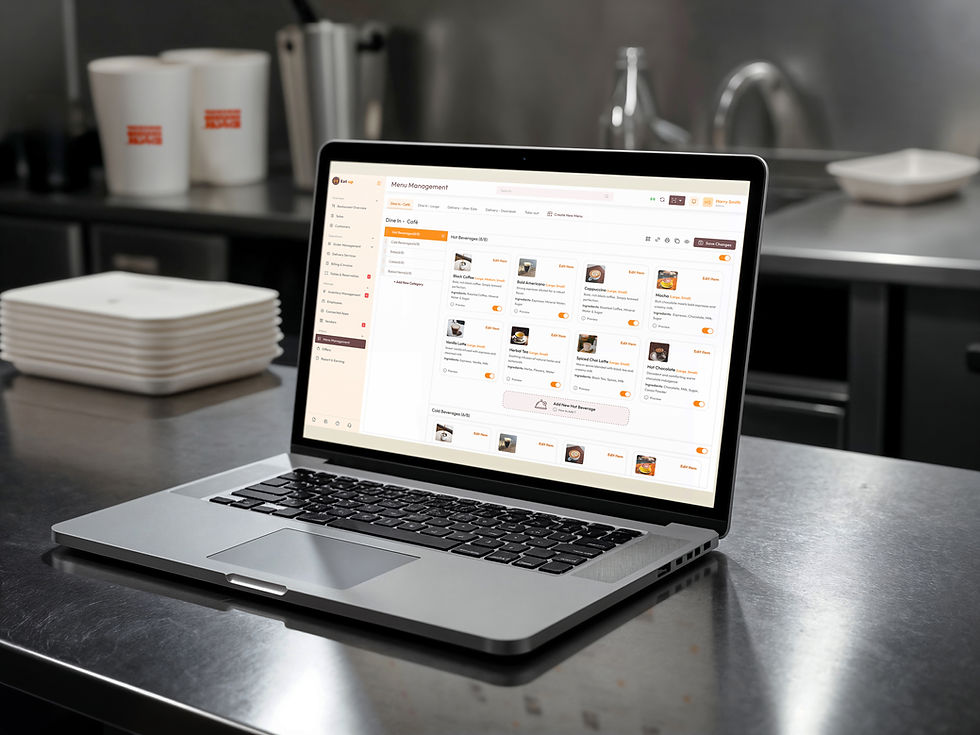
This hobby project, the Unified Restaurant Operations Platform, aimed to solve multi-site management chaos by building a high-velocity, low-click application. Core functional features included centralized Menu Management, seamless Third-Party API integration, and a Centralized Dashboard for real-time business oversight.
Crucially, the solution was driven by UX Research: I created detailed stakeholder personas and defined the Information Architecture to ensure role-based simplicity. This design approach minimized cognitive load, transforming fragmented data into immediate, tailored insights for every user, ensuring internal operational friction never became a visible service failure for the customer.

What motivates our users
This is a brief structure that I can explain the depth of design service I provide for product companies.

Customers
“Place food orders easily, customize preferences, and enjoy a seamless dining experience with timely service.”
Hover or touch to reveal

Employees
“ Efficiently take and relay orders, serve food, and ensure customer satisfaction through effective communication and coordination with the kitchen.”
Hover or touch to reveal

Managers
“Monitor revenues and sales, analyze performance data, and make informed decisions to maximize profitability and streamline restaurant operations.”
Hover or touch to reveal

INFORMATION ARCHITECTURE
Role based information sharing
INSIGHTS
Design solution for these complex problem.
Failure Prevention
Over 80% of restaurant failures are tied directly to poor cash flow management, emphasizing that this problem is preventable.
Complex Navigation
Overly complicated menus and unclear layouts slow down staff, causing errors and delays during busy times and reducing order accuracy.
The Service Paradox:
A high-quality restaurant experience is defined by invisible service; any internal friction immediately becomes visible to the customer as poor service.
Poor Order Integration
Lack of seamless order syncing between front-of-house, delivery personals, and kitchen leads to food prep mistakes and dissatisfied customers due to delayed or incorrect orders.
Operational Root Cause
This service failure is directly caused by fragmented systems and disjointed data, which translate internal operational inconsistencies into external outcomes like delayed orders and inconsistent quality.
The Data Mandate
Effective management tools are critically required to enable data-driven decision-making, transforming chaotic cash flow into a transparent, managed process for sustainable operations.
Over 80% of restaurant failures are tied directly to poor cash flow management, emphasizing that this problem is preventable.
01 Failure Prevention
Overly complicated menus and unclear layouts slow down staff, causing errors and delays during busy times and reducing order accuracy.
02 Complex Navigation
A high-quality restaurant experience is defined by invisible service; any internal friction immediately becomes visible to the customer as poor service.
03 The Service Paradox:
Lack of seamless order syncing between front-of-house, delivery personals, and kitchen leads to food prep mistakes and dissatisfied customers due to delayed or incorrect orders.
04 Poor Order Integration
This service failure is directly caused by fragmented systems and disjointed data, which translate internal operational inconsistencies into external outcomes like delayed orders and inconsistent quality.
05 Operational Root Cause
Effective management tools are critically required to enable data-driven decision-making, transforming chaotic cash flow into a transparent, managed process for sustainable operations.
06 The Data Mandate
SOLUTION
Design solution for these complex problem.
Role-based simplicity
Interfaces are strictly tailored to the user's role (e.g., cashier vs. owner), filtering out irrelevant features for low cognitive load.

Navigation efficiency
All high-level navigation is visible on the main screen, maximizing clarity and minimizing clicks.

Graphical task flow
Designed informative empty/loading states that build intuitive graphical memory for faster, more confident order management and daily task execution.

DESIGN HIGHLIGHT